
Our Scholars
2025 Scholarship Awardees
Congratulations to our 2025 scholarship recipients — we are proud to support their journeys.
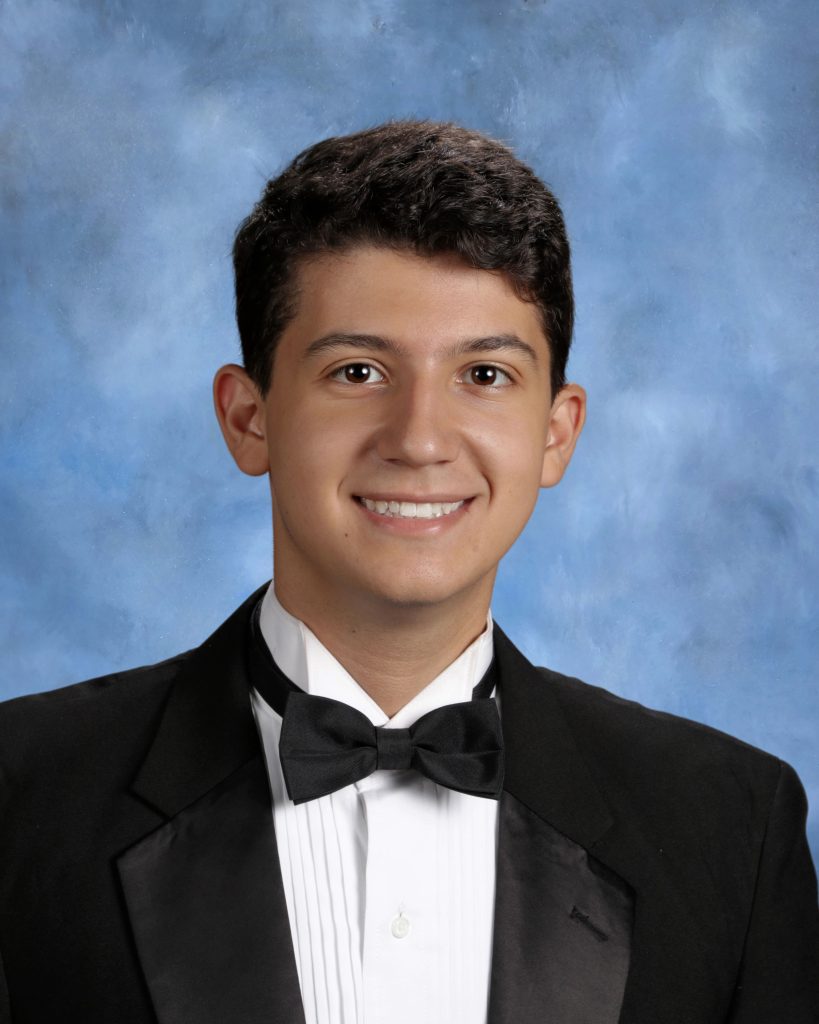
Daniel R. Solano
Daniel R. Solano, son of Quentin and Caroline, Nee Forlini. Graduate of Monroe Woodbury High School. Tri-m Music Honor Society. High Honor roll for four years. Souza Scholarship recipient 2023 and 2025. Music Boosters Maestro Award 2022, 2023, 2025. Attending Wagner College Staten Island, NY.
In 1956, Hugo’s older brothers, Frank and Alfred, left the business at 5 Baxter Street to open their own restaurant at 93 Baxter Street. Hugo stayed behind to work with his father. In 1958, Giuseppe retired and sold the business to Hugo and his cousin, Joe Forlini. The restaurant thrived until 1962, when the city ordered the demolition of the building at 5 Baxter Street. It was then that Frank and Alfred asked Hugo to join them at 93 Baxter Street, and together, the brothers built one of the most remarkable family partnerships, one that blossomed into the thriving and celebrated Forlini’s Restaurant.
In 1956, Hugo met Andreina Garbarino, an immigrant herself from Genova, Italy. The two began a wonderful relationship filled with love and kindness, and they married in 1957. They had four children, three boys Joseph, Aldo, and Stephen, and one girl Caroline. Caroline is my mother and a first-generation American. It’s truly inspiring to learn about my grandfather, “Poppy Hugo,” and the many others who bravely migrated to this country in search of a better life and greater opportunity. Poppy Hugo was very proud of his heritage. He joined the Società Val Trebbia, which became one of his favorite pastimes. He attended every meeting, supported scholarships and the community, and always rallied his friends together to sing Italian songs. He spoke Italian around the house and sang often. He loved being with family and friends, and when he wasn't working, he frequently invited them over for dinner, to play cards, and to sing.
Sadly, my grandfather, Poppy Hugo, passed away from cancer in 2006, just one year before I was born. My mother and Nonna often tell me stories about him so I can understand what a wonderful man he was and all the great things he achieved in his life. He was warm, kind, and always giving.
Although I never got to meet my Poppy or experience the great man he was, I like to believe that everything I pursue is part of his legacy. Ever since I was a little boy, I’ve always enjoyed singing and dancing. My Nonna tells me that I got my passion for music and dance from Poppy Hugo. I always hear stories about how much he loved to sing and how he wished there were a performer in the family. Now, as I prepare to pursue musical theatre in college, I feel like I’m helping fulfill that dream. I wish my Poppy were here today to see that I will continue his legacy and love of music. But deep down, I know that every time I perform and sing, he is right there with me. I can still remember some of my scariest moments on stage, thinking I am not alone. I have my Poppy here beside me. Although I never had the chance to meet him, I carry a deep sadness but an even greater pride in the remarkable legacy he left behind for our family. I wish he were here so I could tell him myself.
I am incredibly proud to be of Italian descent, and I feel so fortunate to have the Società Val Trebbia e Val Nure here today so I, too, can continue learning about my heritage and embrace the culture my grandfather and others brought to this country. I hope to share all of this with my own children someday. I am excited to become a member of the Società Val Trebbia e Val Nure and help ensure that our Italian heritage and culture live on for generations to come.
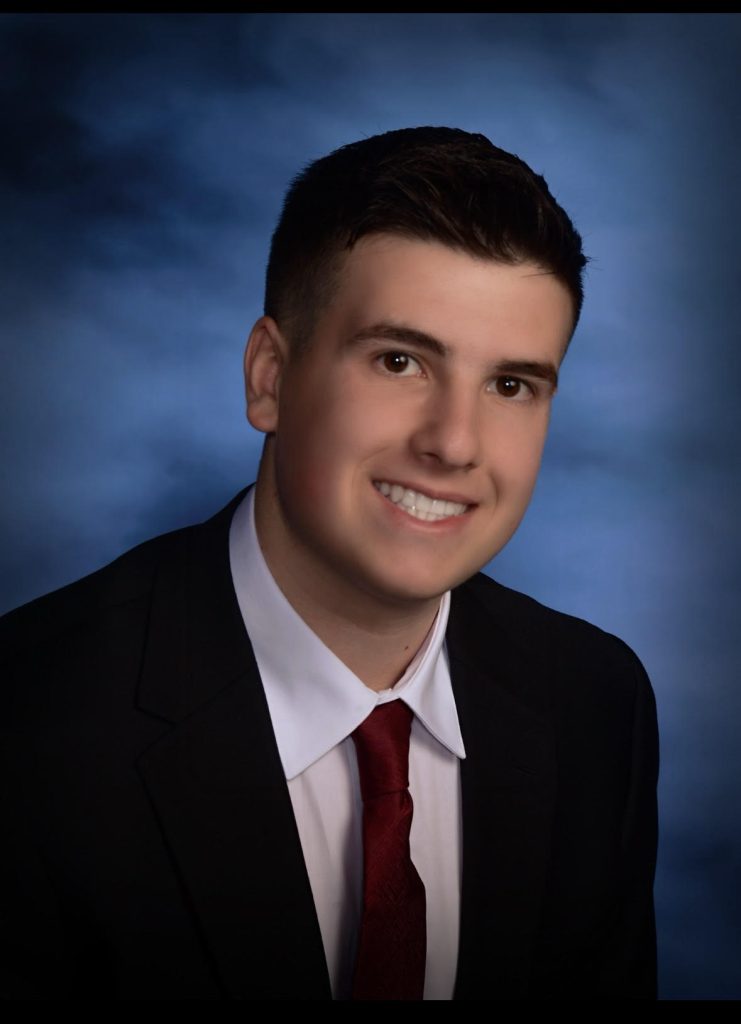
Daniel R. Tangredi
Daniel R. Tangredi, Son of Raymond and Lisa, Nee Zaccarini. Graduate of Yorktown High School. High Honor Roll, Principal’s List, Taekwondo Third Degree Black Belt, Track and field, Volunteer Love in action Non-Profit, Member of SADD and Law Enforcement Club. Attending SUNY Cortland, NY
As a child in elementary school, he would tell me about his old life in Italy and the donkey he would take to school. He would talk about the aninals he raised and food his family would grow and eat. As a kid, I found these stories almost funny because of the contrast to how I grew up. Eventually, he and his family would leave their old life behind in search of a better one. They would eventually arrive in Canada and my Nonno and his father would work long hours to achieve their dream. This was the extent of his life I knew. I would later learn how much harder he really worked.
As I grew up, I always watched him leave everyday to take care of various properties and go to his real estate office. Everyday, like clockwork the school bus would pick me up and his car would not be there when we drove past the house. I knew that he worked hard but I didn’t truly know what he had to do to get where he was later in his life. He would always tell me to work hard and study so I can later go in to higher education and be a successful person. He wanted me to be successful so I would not have to struggle like he did. I didn’t understand what he meant until I learned what he went through in achieving his dream of being able to give his family a comfortable life.
Eventually, I would move on from elementary and middle school and officially be a freshman in high school. This is where I would truly learn the hardships he experienced. I began to learn that he worked long hours doing construction making very little money. Eventually, he worked in a factory for Canadian Tire. He worked his way up and got his father a job there as well. Eventually, this would not be enough. He would move to the United States from Canada and work in New York. Freshman year for me was not easy. Going in I didn’t realize how much of a shift it was from middle school with the increased workload and studying. However, this is what has made me successful.
As I began high school and the work began to get harder I realized that being successful didn’t only affect me but also the people who helped me along the way. Whenever I would start to lose focus or become frustrated I realized that my perceived struggle of homework and studying was nothing compared to him working in a factory all day. Looking back, many things have changed but one thing that hasn’t is the two eggs, toast, hashbrowns and coffee my Nonno still orders for breakfast.
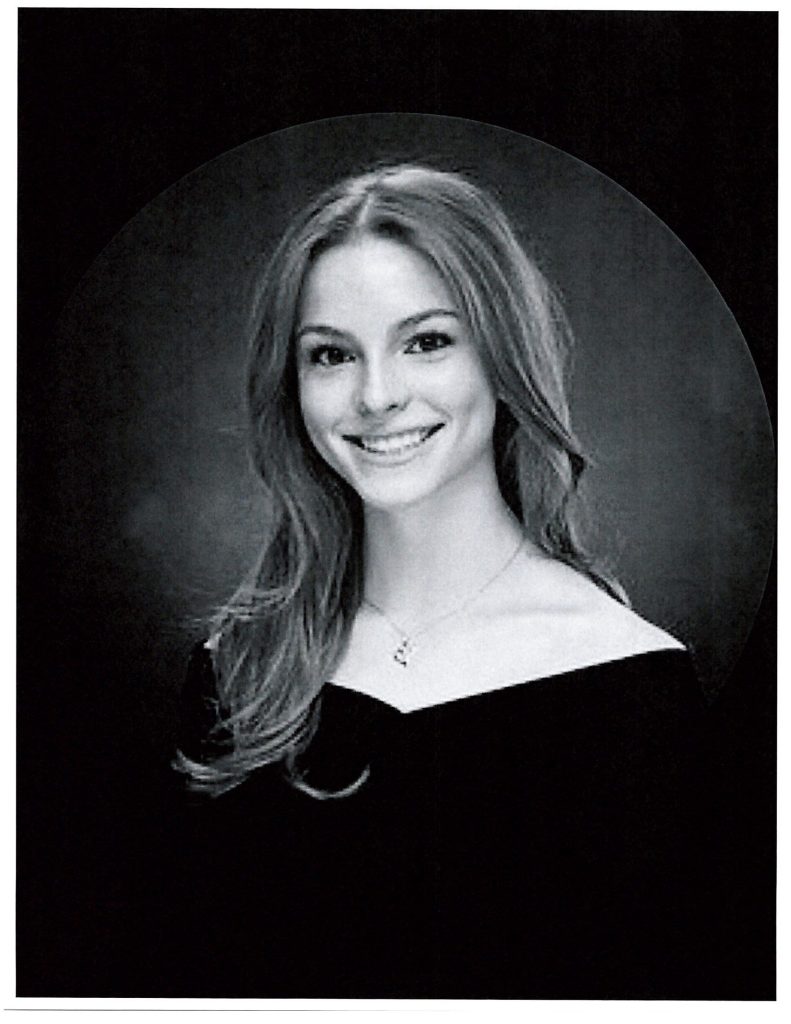
Grace Guglielmetti
Grace Guglielmetti, daughter of Massimo and Audra. Graduate of Immaculate Heart Academy, National Honor Society (Vice President), Italian National Honor Society (Vice President), and Science National Honor Society. AP Scholar, Distinguished Honors, Italian Award, Susan B. Anthony and Frederick Douglass Award (University of Rochester), KariAnn DellaPenta Award, Soaring Eagle Award, and Presidential Service Award. Co-President of DECA and competitive dancer. Attending Indiana University's Kelley School of Business in Bloomington, IN.
As most Italian immigrants experienced, their journey was not without hardship, however. My nonno Cesare never met his father until the age of three because of World War II. As a baby, he was hidden in a rabbit hutch and a beehive by my great-grandmother Adele ("D'lu" in Piacentino dialect)-an act of desperation to protect him and other village children from Nazi soldiers. Years later, prior to immigrating to the U.S., he joined the Italian army and then worked as a mason building homes, stables, and other structures with his father, Luigi. My nonna Domenica's childhood was more pastoral. One of my favorite stories is of how, as a little girl, she would hold on to the tail of her favorite cow and fall asleep while being led up the mountain to pasture-because the cow knew the way.
Though immigrating to America separately, my grandparents married and moved to Bensonhurst, Brooklyn. Limited with the English language, my nonna worked in a bakery while my nonno worked long hours as a cement mason in and around New York City. Together, they gave my father a strong foundation, emphasizing education, and teaching him the virtues of sacrifice, work ethic, and pride in Grace Guglielmetti- Società Val Trebbia e Val Nure Scholarship Essay where you come from.
One of the most meaningful ways we've stayed connected to our roots is through the Societá. My nonni, my father, my zia, and her children Cristina and Fabio are all members of the Società. I've grown up attending the annual dinner dances and Krucker's Father's Day picnics, surrounded by the laughter, language, and traditions of our people. I remember grinning with pride as a little girl to be part of something so vibrant and deeply rooted in our shared heritage. Seeing cousins and extended family at these events is a constant reminder this community spans both generations and oceans.
The Societá is more than just a tradition-it is a living link to our homeland and our identity as a community. It celebrates the strength and perseverance of the Piacentini people and honors the sacrifices our ancestors made both here in the U.S. and back home in Italy. My father received this very scholarship, and it would be the greatest honor to continue that legacy as I pursue my education at Indiana University's Kelley School of Business. There, I'll be studying finance, accounting, and business analytics with the same determination and passion my grandparents carried across the Atlantic. I am proud to be bilingual in Italian, and though my speaking skills are still growing, I can read, write, and understand the language-and especially love hearing the Piacentino dialect from my grandparents. Our holidays are steeped in Italian tradition, and no celebration is complete without polenta with cotechino or anolini, two of my favorite dishes that connect me to my family's table in Italy.
I've been fortunate enough to visit Piacenza twice already and will be returning this summer to reunite with relatives and reconnect with the place that shaped so much of who we are. This opportunity means more than words can express. It is a way to honor my family's sacrifices, continue our place in the Societá's story, and carry forward the values that were born in the hills of Piacenza and nurtured through generations.
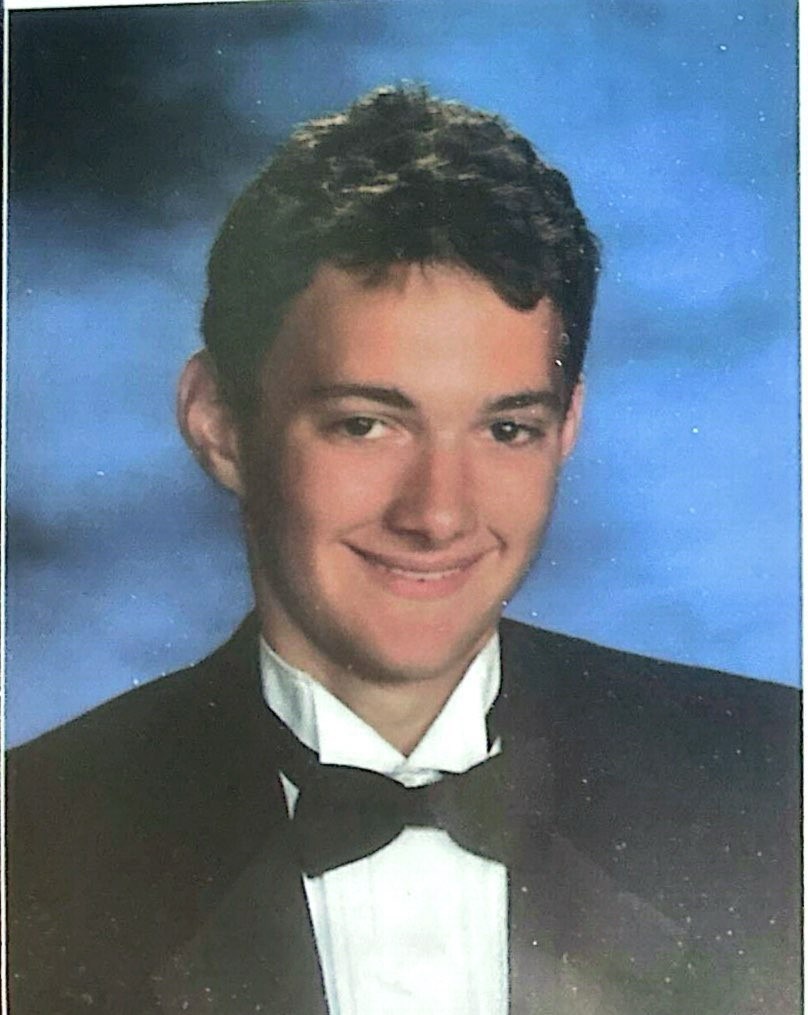
Luke P. Pedretti
Luke P. Pedretti, son of Paul and Cindy. Graduate of Walt Whitman High School. High Honor Roll, Member of the Rho Kappa Social Studies Honor Society, English Honor Society, World Language Honor Society, National Honor Society, Varsity Volleyball, Varsity Badminton, High School Jazz Band, Business Honor Society. Attending Virginia Tech, Blacksburg, VA.
To begin, the first topic to be discussed is about Po Valley and its significant role as a crossroads for trade, agricultural use and military activity. The Po Valley, also known as Pianura Padana, has a rich history spanning from ancient times to modern Italy. It played a crucial role in Roman trade, the Renaissance, and World War II, and continues to be a major industrial and agricultural area. When the valley was first inhabited by different Greek and Indo-European tribes, the land was used as a form of agriculture. The main reason for this is because within the Po Valley, there is a fertile river also known as the Po River, which was used by early tribes for irrigation and the domestication of many different crops and animals. This form of agriculture has left the tribes in Po Valley as a huge hub for agricultural products and would eventually lead to urbanization of the area in the future. Additionally, the area has grown into a huge trade hub because of the mass production of agricultural goods, allowing for more immigration into the area and increased urbanization of the valley into a bigger village. The trade was influenced more heavily when the Roman Empire was formed, allowing for it to be one of the central trading hubs and agricultural producers in the empire. During the Renaissance era, Cities along the Po River, like Turin and Ferrara, flourished as cultural and economic hubs during the Renaissance. Ferrara became an intellectual and artistic center, attracting Renaissance artists, leading to the artistic culture and baroque influence on the town. Fast forward to more modern history during World War II, the Po Valley Campaign was a major battleground in the Italian campaign during World War II. The Po Valley Campaign was a significant Allied offensive aimed at forcing Italy out of the war and diverting German troops from the Eastern Front. The final Allied attack in Italy, codenamed "Operation Grapeshot," led to the surrender of Axis forces in Italy by May 2, 1945.
The Po Valley in present day history is crucial to Italy's economy, agriculture, and infrastructure. It is Italy's most productive agricultural region, producing wheat, rice, fruits, and vegetables, and supports major industrial centers. The Po River itself is essential for transportation, hydroelectric power, and water supply to these areas. The Po Valley in the Province of Piacenza is very important not just for the economy but also for modern Italian culture. The valley's cultural heritage includes culinary traditions, artistic expressions, and a unique history of river navigation and land reclamation. The Po Valley is home to major cities like Milan, with iconic landmarks such as the Duomo and Teatro alla Scala, which are significant for Piacenza’s musical and artistic traditions and expressionism. Ferrara, a UNESCO World Heritage site, exemplifies the Renaissance concept of the "ideal city" with its planned neighborhoods. Finally, The region's artistic heritage includes the Sacred Mountains in Lombardy and prehistoric rock paintings in Valcamonica. Therefore, Po Valley in the Province of Piacenza started out as a small agricultural town, and has since grown to fame by influencing Italian culture, promoting cultural values, and participating as a central hub for trade during many different time periods.
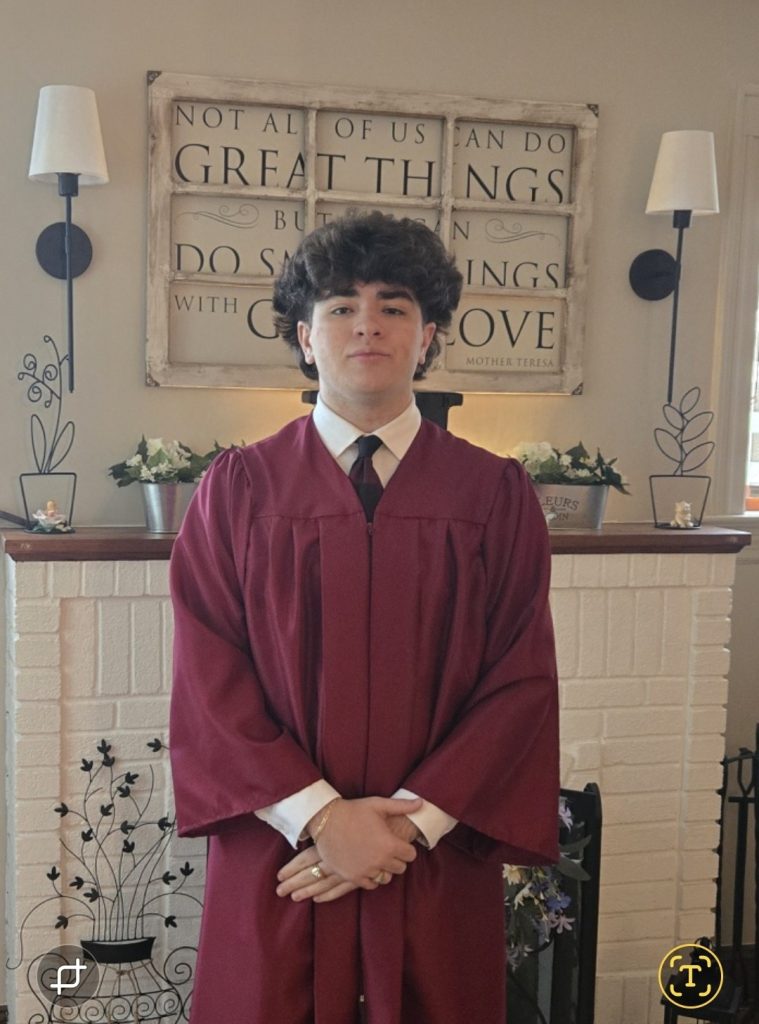
Mark J. Manfredi
Mark J. Manfredi, son of James and Gisele, Nee Valenzisi. Graduate of Monsignor Farrell High School. Freshman Baseball and JV, Flag Football, School Ambassador Service Awards 4 years. E-Sports competitive gaming, WFBN TV Studio, Sate Textbooks, Intramural Basketball, Holy Name Society. Attending The College of Staten Island.
Recently, I found myself drawn to Piacenza, a province in the Emilia-Romagna region in northern Italy. I'm not from there and I don't have relatives in the area, but Learning about it has helped me understand how rich and diverse Italian culture really is.
Piacenza has an impressive history that stretches all the way back to ancient Rome. It was founded in 218 BCE as Placentia, a military outpost meant to secure the northern frontier of the Roman Republic. Its Location, along the Via Aemilia and near the Po River, made it a hub for movement and trade for centuries. I was surprised to learn that Piacenza wasn't just a quiet northern town, it actually played a major role in resisting imperial control during the Middle Ages as one of the founding members of the Lombard League.
What stood out to me even more than its history was its unique cultural identity. The architecture alone is like a walk through time. The Piacenza Cathedral is a stunning example of Romanesque style, and the massive Palazzo Farnese shows how much power and influence the city once held. I think part of what makes Italian culture so special is how each region carries its own artistic and historical identity, and Piacenza is no exception.
And of course, I couldn't look into Piacenza without coming across its food. Even though southern Italy is famous for bold flavors and fresh seafood, Piacenza has its own claim to fame with its cured meats. It's the only Italian province that has three DOP-protected meats: Coppa Piacentina, Salame Piacentino, and Pancetta Piacentina. These aren't just products, they're pieces of local heritage, shaped by generations of tradition. As someone who grew up hearing stories about the pride my grandparents had in southern Italian food, I can really respect the pride Piacenza takes in its own culinary roots.
Learning about Piacenza has reminded me how layered Italian identity is. While I'll always feel a personal connection to the south through my family, discovering regions like Piacenza helps me appreciate the incredible variety within Italy. It's like each province adds a different color to the larger picture. And even if it's not a part of my own story directly, Piacenza has given me a deeper sense of what it means to be Italian.
As I look ahead to visiting Italy someday, I'm filled with excitement, not only to reconnect with my family's southern roots but also to explore regions I've never seen before.
Piacenza is definitely on my list. I'd love to walk through its historic streets, taste its local specialties, and experience firsthand the culture I've only read about so far. It's one thing to study a place, but something entirely different to be there, and I can't wait for the chance to do both.
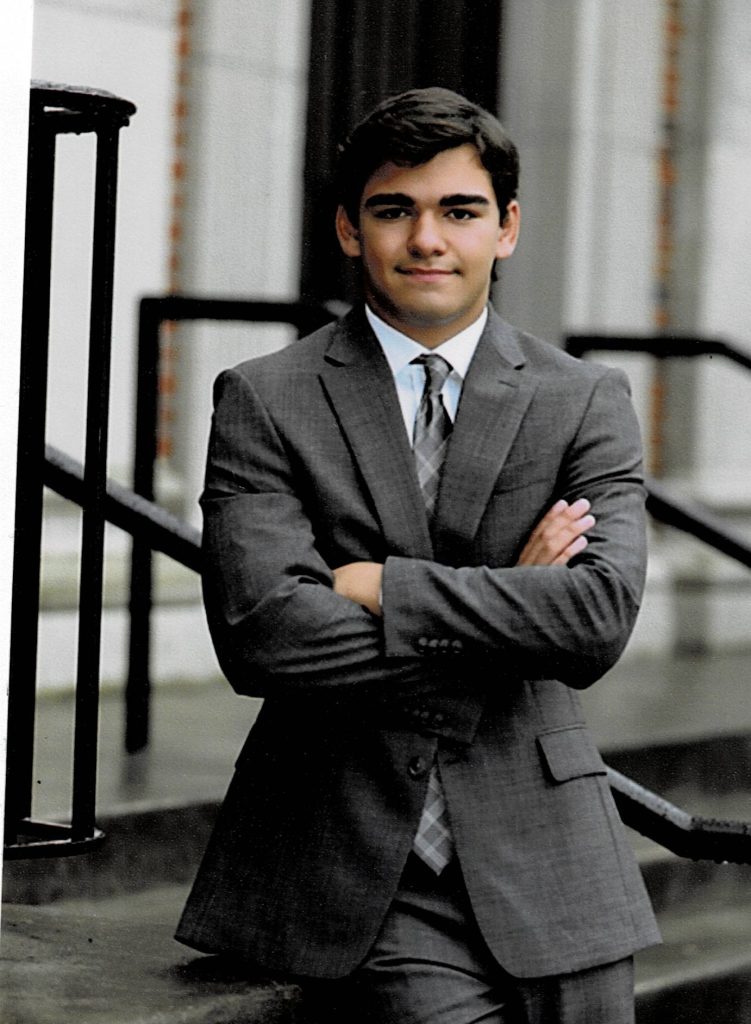
Sam J. Cavanna
Sam J. Cavanna, son of Anthony and Maria, Nee Micela. Graduate of Eastchester High School. I Love History Award, Wrestling Team 2-time captain All Section and All County, Unified Sports, Partner Athlete for Athletes with disabilities, Eagle Scout BSA, Attending Roger Williams University, Bristol, RI.
One of my two grandparents who were born from this city is my grandfather, Giuseppe Cavanna. He was born on July 12th, 1943, in Negri, a small hamlet in the province of Piacenza. In 1966, he left Italy in search of the American Dream. Shortly after arriving in New York, he was met by his uncle and aunt, Pietro and Concetta Scagnelli, who helped him get started. He began his journey in America as a dishwasher at Forlini's Restaurant in Little Italy, Manhattan, while attending drafting school. Although he aimed for a career in drafting he slowly fell in love with the restaurant. Over time, his work in the restaurant sparked a love for cooking, and it became his true calling as an aspiring chef.
Giuseppe honed his craft at The Brussels, a midtown Manhattan restaurant, for ten years. From there, he became the head chef at Emilio's Restaurant in Harrison, New York, where he remained for nearly two decades. Eventually, alongside his brothers-in-law Renzo and Jimmy Rapacioli, he opened Binelli’s Restaurant in the Bronx. He poured his heart into the kitchen until he finally hung up his apron and retired.
My other Grandparent was also from the city of Piacenza. Silvana Cavanna (Rapacioli), was born on August 30th, 1946, in Casa Delle Donne, in San Michele, township of Morfasso, Piacenza. Her early life was shaped by the strength and unity of her large family. Her parents, Guido Rapacioli and Giuditta Binelli, worked hard to provide a better future for their children. After struggling to build a life in post-war Italy, her father immigrated to the U.S. in 1959 with several of her older siblings. A year later, in 1960, Silvana, her mother, and her younger siblings made the transatlantic journey aboard the Olympia, arriving in New York after nine grueling days at sea.
In America, Silvana attended Yorkville Vocational High School in Manhattan, where she chose the commercial track, learning to type and studying business. Despite not speaking English at first, she excelled, graduating with honors in 1963 and immediately entering the workforce as a typist at Metropolitan Life Insurance Company. Her first paycheck of $40 per week gave her a sense of pride and independence.
It was at Forlini’s Restaurant, the very place where my grandfather began his American journey, that Silvana worked coat check and met Giuseppe in 1969. They were married in July 1970 and settled in the Bronx, just doors away from her parents. Where they raised three children, my father Anthony Cavanna, my aunt Lisa, and uncle Eric. They all went on to win scholarships and achieve their own successes. While raising her children, My grandma worked hard and moved up from being an insurance agent to a licensed broker. She stayed in that job for more than 20 years before she retired. Her strong work ethic and willingness to sacrifice came from her family and her Piacenzian roots.
Today, as her grandchild, I visit them during the holidays to enjoy the incredible food that is such an important part of our heritage. My Grandfather has shared many of his dishes with me over the years. They make sure to always come around to drop off homemade pie and raw pasta. Each dish is a piece of our history, a reminder of where we come from.
Though I’ve only visited once, when I was 4. I still remember getting eggs from the chickens in the morning. From the photos of the valleys and mountains of Piacenza, I feel deeply connected to it. I hope to visit again someday soon and experience the land that gave rise to such strength, courage, and love in the people who came before me.